The History of Vibery: From 2020 Prototype to Agentic Ecosystem
This journey started with a simple realization: my brain works differently, and the tools I was using weren't built for it.
Back in 2020, before AI-integrated tools were a mainstream reality, I envisioned a game designed to help people like me—those dealing with ADHD and executive dysfunction. I knew that one of the best ways to motivate myself was to play games in between my work sessions. It felt like a great reward for getting in focus time, and I often found that I "tunnel visioned" less and enjoyed both my work and my free time more when I structured my days that way.
The First Prototype (2020)
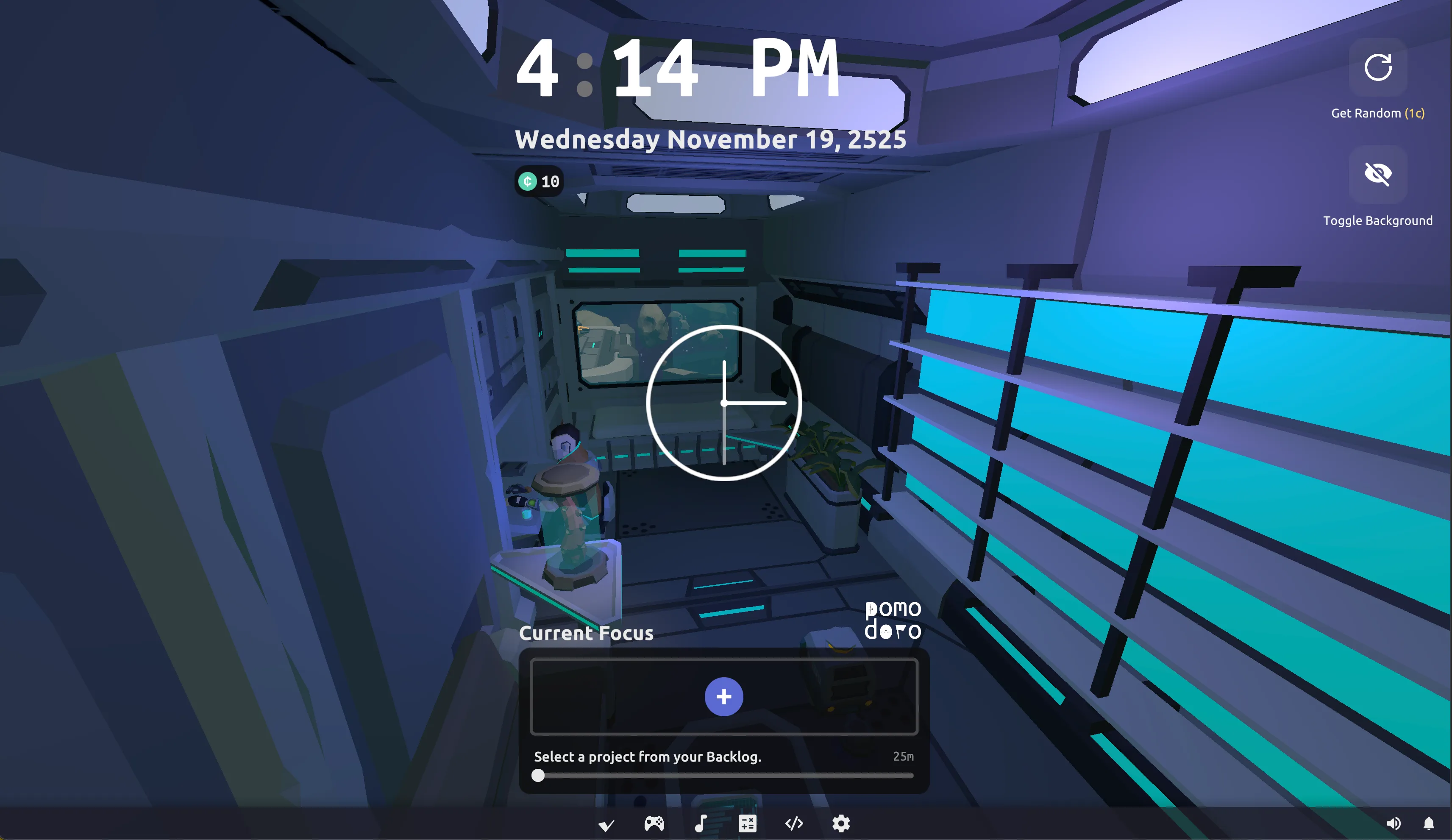
I built a quick web prototype in Unity, wrapped in a WebGL player. It featured a 3D scene with a character in a space station serving as the background for a desktop-like UI with basic productivity tools.
The original 2020 vision: A space station buddy for your desktop.
I envisioned building it out as a platform where completing focus sessions would reward you with credits to use in games. I thought about how games might be designed specifically for the platform—rewarding focus time while fitting perfectly into short break sessions throughout the day. It worked well and had a huge personality.
However, it was too limited for my actual work. It couldn't interact with my real files without a heavy investment I couldn't make at the time. I loved the feeling of having a "focus buddy," and I wanted to add more interactions—customizing rooms, unlocking pets, progression mechanics—but life got in the way. At the time, I was at Wizards of the Coast, helping my team navigate COVID-19. We had two massive products I was trying to bring to market that suddenly had their launch plans upended. Vibery had to wait.
The Rise of Productivity Games
Every once in a while, I would fire it up again. I’d go to the site and put in time with my little space station buddy. The immersion—the audio of the station, the feeling of him working away—was still there.
In the years that followed, several games in this category started to emerge. Because of COVID and the shift to remote work, everyone was isolated. Lo-Fi Girl and Lo-Fi Beats to Study To became the soundtrack for every knowledge worker. By the end of 2022, the genre of "productivity games" was real and here to stay. Some of my favorites, like Spirit City and Ithaca: Magic Studies, accomplished so much of what I had hoped to do with Vibery. I was happy for them—and a bit sad I hadn't brought the same thing to market myself.
The Agentic Threshold (2024-2025)
Then, the power of generative AI crossed a threshold. In 2024 and 2025, we saw agents become capable of doing complex work beyond just writing and image generation. AI models could now help you code, debug complex issues, and eventually plan and fully implement features inside your IDE.
By the end of 2025, many of us—programmers and product managers alike—were no longer even opening the IDE to ship things. We were managing specs and working with AI agents instead.
Enter Openclaw
Since the start of 2026, the pace has only increased. Openclaw emerged as perhaps the first agentic framework for personalized AI that actually works. It shattered records for open-source repos on GitHub as millions started using it to build their own personal AI assistants.
Openclaw foreshadowed the future of digital creation. It can work with your real files, control your computer, navigate the web, and schedule reminders. It doesn't just do the work you wish you could outsource; it can think and grow proactively. This isn't just for developers anymore—anyone can interact with it through a chat app.
Picking Up the Torch Again
This shift is why I picked up the Vibery project again. I decided to integrate it with Openclaw, turning my "buddy in space" into part of a multi-agent team. My vision was to make Vibery the most engaging way to collaborate with them as the world shifts toward agent-powered work.
Within a couple of weeks, I had updated the Space Station scene and integrated a proof of concept. It was compelling, but Openclaw’s rapid security updates kept breaking my integrations. More importantly, I was limited by its baked-in architectural assumptions.
I knew I needed a system where AI agents could meaningfully power the work I was doing while using Vibery, but Openclaw wasn't built to be the foundation of a consumer product. It was a framework for tinkerers.
Building the Vibery Framework
So, I decided to build my own tailor-made backend and multi-agent orchestration framework for Vibery. I thought it would take me at least a week, even with today's AI tools.
Five days in, I am mostly at parity with what Openclaw offered, and the agents collaborate even better than I thought was possible.
I can’t wait to open this up to others to test as I continue building. Your station is waiting.